
Techniques for timely, specific comments that improve student work remotely
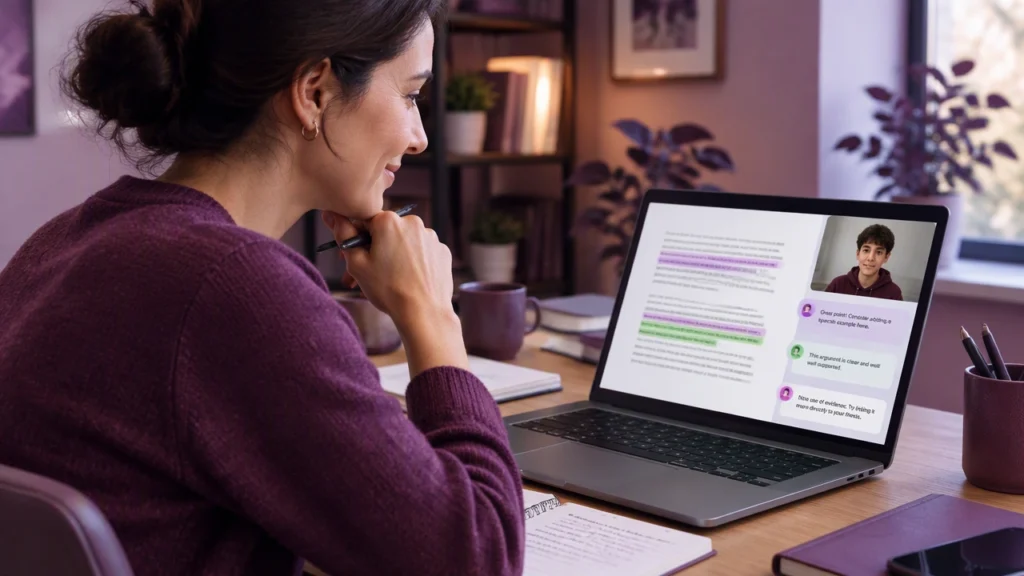
Remote and blended classrooms have made learning on the internet a daily reality for millions of students and teachers. In this setting, the way educators comment on digital assignments can either accelerate growth or quietly stall it. Timely, specific feedback is one of the most powerful tools a teacher has, because it meets learners exactly where they are in the process. When students receive clear notes shortly after submitting work, they can connect guidance to the task while their thinking is still fresh. This article explores practical techniques that help teachers give feedback on digital assignments in a way that is both efficient and deeply supportive of student progress.
Why timely and specific feedback matters in remote learning
In a physical classroom, a teacher can glance over a student’s shoulder, point to a sentence, and offer a quick suggestion. Online, that moment must be recreated intentionally. Timely feedback reduces uncertainty, prevents misconceptions from hardening, and keeps motivation high. Specific feedback, on the other hand, moves beyond general praise or vague correction. Instead of saying “good job” or “needs work,” a teacher identifies exactly what is effective and what can be improved. For example, noting that a thesis statement clearly previews three reasons gives the student a model to replicate. Pointing out that a math solution skips a justification step tells the learner precisely where to focus next. Together, timeliness and specificity create a learning loop that feels responsive, fair, and actionable.
Set clear expectations before the first comment
Feedback works best when students already understand the criteria they are being measured against. Before an assignment begins, share a rubric, checklist, or set of guiding questions. Explain what strong performance looks like in concrete terms. When students know that an essay will be evaluated on claim clarity, evidence quality, and paragraph organization, they can self-assess before submission. This preparation also makes your comments more meaningful, because students can connect your notes to the standards they studied from the start. In digital environments, posting these expectations in a learning platform, a short video, or a pinned announcement helps students revisit them at any time.
Use the comment-plus-question method
One of the most effective techniques for remote feedback is pairing an observation with a guiding question. This method balances affirmation with inquiry, encouraging students to think rather than simply comply. For instance, a teacher might write, “Your introduction hooks the reader with a strong statistic. What evidence could strengthen your second paragraph to match this opening?” The comment names what works, while the question directs attention to the next step. This approach respects student agency and builds critical thinking, even when the teacher cannot be present in real time. It is especially useful in threaded discussion boards, recorded video feedback, and annotated documents.
Prefer audio or video comments for complex feedback
Typed comments are efficient, but they can feel impersonal and sometimes lack nuance. When a task involves layered reasoning, oral presentation, or creative expression, a short audio or video note can carry tone, pacing, and encouragement more naturally. Many learning platforms allow teachers to record brief voice annotations directly on a student’s submission. A two-minute recording that walks through strengths and next steps often replaces a long string of written notes. Students report feeling more connected to the teacher’s intent when they hear a supportive voice, and teachers find that recording can be faster than typing detailed explanations.
Anchor feedback in observable evidence
Remote learners benefit when feedback is tied to visible parts of their work. Instead of writing “your analysis is weak,” reference the exact sentence, timestamp, or calculation where the gap appears. For example, “At 1:42 in your presentation, you mention a cause but do not connect it to the data shown on slide five. Adding that link would make your argument more persuasive.” This kind of evidence-based commenting reduces defensiveness and confusion. It also models the habit of grounding claims in specifics, which is a valuable academic skill. When students see that feedback is tied to what they actually produced, they are more likely to trust the guidance and apply it.
Offer a small number of prioritized action steps
A common pitfall in online feedback is trying to address everything at once. Long lists of corrections can overwhelm students and dilute the impact of the most important suggestions. Instead, identify two or three priority areas that will make the biggest difference. Label them clearly as “focus now” items. You might write, “To strengthen this draft, focus on these three steps: clarify your thesis, integrate one more source in paragraph three, and revise your conclusion to restate the main insight.” After the student revisits those areas, you can open a second round of feedback on finer details. This staged approach keeps the process manageable and builds momentum.
Design feedback loops, not one-way comments
Feedback becomes most powerful when it invites a response. Encourage students to reply to your notes with a short reflection, a revised paragraph, or questions about next steps. In digital platforms, you can create a simple protocol: after receiving comments, students submit a brief revision plan or a revised section within a set timeframe. This turns feedback into a dialogue. It also helps teachers see whether guidance was understood and applied, which informs future instruction. When students know they will be asked to respond, they read comments more carefully and take ownership of the revision process.
Use rubrics and quick checklists to speed up consistent feedback
Time pressure is real for teachers managing multiple sections and digital tools. Building a reusable rubric with clear descriptors makes commenting faster and more consistent. Add short phrases that describe common strengths and common errors at each level. During review, a teacher can select rubric phrases and then add one or two personalized notes. This combination of structured criteria and individualized comments keeps feedback both efficient and human. Quick checklists also help students self-assess before submission, reducing avoidable errors and freeing class time for deeper coaching.
Balance encouragement with challenge
Students who are learning online often need visible signs that their effort is recognized. Genuine encouragement, tied to specific progress, helps sustain motivation. At the same time, feedback should challenge students to reach for the next level. A balanced comment might sound like, “You have organized your steps clearly, which makes your method easy to follow. To push further, consider explaining why each step is necessary, not just what you did.” This blend of affirmation and aspiration communicates confidence in the student’s ability to grow. It also keeps the focus on improvement rather than perfection.
Close the loop with brief follow-up
After students revise, acknowledge the changes and note any remaining areas for development. A short follow-up comment such as, “Your revised thesis is sharper, and your evidence now supports it well. Next, work on smoother transitions between paragraphs,” signals that the teacher is tracking progress. This continuity matters in remote settings where students may otherwise feel invisible. Even a few sentences of follow-up can strengthen the learning relationship and motivate continued effort.
In the end, giving feedback on digital assignments is not about writing more; it is about writing with purpose. Timely, specific, and evidence-based comments help students understand where they are and how to move forward. When teachers combine clear expectations, prioritized action steps, and responsive dialogue, remote feedback becomes a powerful engine for growth, one thoughtful note at a time.